Not every contractor who claims principal contractor experience has truly earned it. Managing a complex build programme as principal contractor demands a very different skillset to delivering a straightforward package of works — and the difference becomes apparent quickly once a project is underway. In this post, we explore what genuine principal contractor experience looks like and why it matters when you’re appointing a contractor for your next development.
What Does a Principal Contractor Actually Do?
Under CDM 2015 regulations, the principal contractor carries overall responsibility for managing health and safety during the construction phase of a project. But the role goes far beyond regulatory compliance. A principal contractor is responsible for coordinating all trades and subcontractors, managing the programme, maintaining quality standards across the entire project and keeping the client informed at every stage.
It’s a role that requires strong leadership, commercial awareness, excellent communication and the ability to anticipate and resolve problems before they escalate. These are skills that are developed through experience — not overnight.
The Coordination Challenge
One of the most demanding aspects of the principal contractor role is trade coordination. On a complex build — a care home development, for example — there can be dozens of trades and subcontractors working across the site simultaneously. Electrical, mechanical, structural, groundworks, fit-out — all need to be sequenced correctly, managed carefully and kept aligned to the programme.
A principal contractor without genuine experience of managing this level of complexity will quickly find themselves firefighting rather than leading. And when a principal contractor is reactive rather than proactive, the consequences ripple through every aspect of the project — programme delays, cost overruns and quality issues that are far more expensive to resolve after the fact than to prevent in the first place.
Programme Management & Client Reporting
Experienced principal contractors understand that programme management is not a passive activity. It requires constant monitoring, regular review and a willingness to make difficult decisions quickly when circumstances change. A week’s delay early in a programme can become a month’s delay by the time it reaches handover if it isn’t addressed promptly and decisively.
Client reporting is equally important. Clients appointing a principal contractor are placing significant trust and significant investment in that contractor’s hands. They deserve clear, honest and regular communication about programme progress, any emerging risks and the actions being taken to address them. That level of transparency is something genuinely experienced principal contractors provide as a matter of course — not as an afterthought.
Heritage & Specialist Builds — Where Experience Really Shows
On specialist projects — listed building restorations, heritage developments or builds with complex structural requirements — principal contractor experience becomes even more critical. These projects require not only strong general management capability but also a deep understanding of the specific technical challenges involved.
A principal contractor managing a heritage restoration project needs to understand conservation requirements, coordinate specialist subcontractors with niche expertise and maintain compliance with heritage legislation throughout. The margin for error is smaller, the consequences of getting it wrong are greater and the demands on the principal contractor are correspondingly higher.
What to Look for When Appointing a Principal Contractor
When appointing a principal contractor for a complex build, look for:
- Demonstrable project experience at principal contractor level on comparable builds
- Strong references from previous clients — not just from subcontractors
- Clear programme management methodology — how do they plan, monitor and report?
- Accreditations — CHAS, Constructionline and relevant industry memberships
- Transparent communication — do they ask the right questions at tender stage?
- Repeat business — do their clients come back to them? That’s the most honest indicator of all
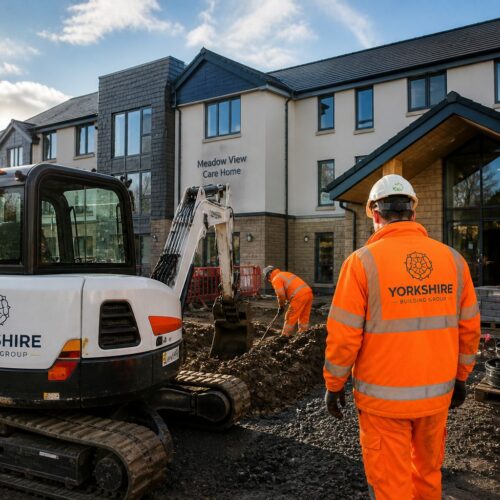
At Yorkshire Building Group, we have genuine principal contractor experience across construction, civil engineering and structural preservation — including the delivery of complex care home developments where programme management, trade coordination and quality control are all critical. If you’re looking for a principal contractor you can trust to deliver, we’d love to discuss your next project. Discuss Your Project With Yorkshire Building Group.